
Travel Safety Tips: Enjoy Your Journey While Being Secure
This post contains affiliate links. If you book through them, we may earn a small commission at no extra cost to you. It is a small way to support our adventures and keep the guides coming. Full disclosure →
Traveling to new places is exciting, and it gives you a glimpse into cultures, perspectives, and experiences you would never get at home. It is also the thing most likely to keep you up the night before a trip, especially when you are the one who did all the planning and you are now responsible for two people instead of one.
Here is the good news. Most travel safety comes down to a handful of decisions you make before you leave, and a few habits you keep once you are there. None of it requires you to be paranoid or to skip the parts of a trip that make it worth taking. These are the travel safety tips we actually use on every trip, including the ones we learned the hard way, and the specific things we do differently because we travel as a couple.
At a Glance
- Split everything: We never keep both sets of cards, cash, or documents in one bag.
- Copy your documents: Keep a physical copy and a digital copy, stored separately.
- Sort your phone before you fly: An eSIM or international plan is a safety tool, not a luxury.
- Track your bags: An AirTag in each checked bag has saved us more than one stressful morning.
- Have a plan for the worst day: Know what you would do if a passport, phone, or wallet disappeared.
Before You Leave Home
Almost everything that keeps a trip from going sideways happens before you get on the plane. These are the four things we sort out every single time, and together they take less than an hour.
Research more than the fun stuff
When you plan a trip, it is easy to spend all your research time on restaurants and neighborhoods and none of it on how the place actually works. Take twenty minutes to familiarize yourself with local customs and laws, because knowing the legal expectations in advance keeps you out of misunderstandings that turn into real trouble. This matters more than people think in places where photography, drinking in public, or public displays of affection are treated differently than they are at home.
Check your government’s travel advisories while you are at it. Americans can look up any country at the U.S. Department of State, and UK travelers can check the Foreign Office. Read the sections on local scams and petty crime rather than just the headline risk level, because the practical warnings are the ones you will actually use.
Finally, check the health requirements. Some destinations require vaccinations before entry, and it is much better to find that out two months ahead than two days ahead.
Copy your travel documents, twice
Make copies of everything that matters, including your passport, visas, travel insurance, and itinerary. Keep one physical copy and one digital copy, and store them in different places so a single stolen bag cannot take both. We each carry a copy of the other person’s passport, which sounds excessive right up until one of them goes missing.
Once you are at your accommodation, leave the original passports in the safe and carry only the copies with you during the day. In most countries a copy is enough for everyday situations, and it means a pickpocket walks away with paper instead of your ability to fly home.
Email the photos of your documents to yourself rather than only saving them to your phone. If your phone is the thing that gets stolen, you can still get to them from any computer, including one at a hotel front desk or an embassy.
Register your trip with your embassy
This one takes about five minutes and almost nobody does it. U.S. travelers can enroll a trip for free in the Smart Traveler Enrollment Program, which sends you alerts about the country you are visiting and makes it easier for the embassy to reach you in an emergency. We also save the address and phone number of the nearest embassy or consulate in our phones before we go, along with the local emergency number, because 911 is not universal and you do not want to be looking it up in the moment.
Travel insurance and travel medical insurance are not the same thing
This is the part almost nobody explains properly, and it is the reason people end up either double-covered or not covered at all. “Travel insurance” gets used as a catch-all, but there are really two different products doing two different jobs, and you may want one, both, or neither depending on the trip.
- Travel medical insurance pays for what happens to your body. That means doctor visits, hospital stays, emergency treatment, and medical evacuation while you are abroad. It does not care what your flights cost and it will not give you that money back.
- Trip insurance, sometimes called trip protection, pays for what happens to your trip. That means cancellation, interruption, delays, and lost or delayed baggage. It is priced as a percentage of what you prepaid, and its medical coverage is usually secondary or limited.
The easiest way to think about it is that medical coverage protects you from a bill you did not plan for, and trip coverage protects you from losing money you already spent. A broken ankle in Italy is a medical claim, and a cancelled flight that kills two nights of a nonrefundable hotel is a trip claim. Those are different policies.
If you only buy one, buy the medical coverage. A cancelled trip costs you the money you already spent, which is painful but finite. A medical emergency abroad has no ceiling, and an emergency evacuation can run into the tens of thousands of dollars on its own.
Travel medical insurance
Most domestic health plans do very little once you leave the country, and some do nothing at all. That is the gap travel medical insurance fills, and it is also the gap a credit card almost never covers, which is why we treat it as the non-negotiable one.
We like SafetyWing Nomad Insurance. The reason we landed on it is that it works like a monthly subscription rather than a per-trip policy, so you can start it while you are already abroad, pause or cancel it when you are home for a stretch, and leave it running in the background if you take several trips a year. For two people who travel often around full-time jobs, that suits us far better than buying a fresh policy every time we book something.
Be clear on what it is, though. This is medical coverage first, with some travel benefits attached. It is not a cancel-your-trip-and-get-your-money-back policy, so read the coverage details and do not assume it handles the trip side.
Here is what it currently costs, so you can see the real number rather than guessing:
Cover the medical side first
SafetyWing Nomad Insurance covers medical emergencies abroad on a monthly plan you can start, pause, or cancel as your travel changes.
Get a quote →Trip insurance, and when it is worth buying
Trip insurance is worth the money when you have a lot of nonrefundable cost sitting on the table. Think a cruise, a booked-out multi-day tour, peak season flights, or a trip built around one dated event you cannot move. It is much easier to skip on a long weekend where the hotel cancels free up to the day before and the flights were cheap.
Two things to know before you buy. Policies are priced as a percentage of your prepaid trip cost, so the more you spent, the more it costs. And standard cancellation only pays out for covered reasons listed in the policy, which usually means illness, injury, or specific emergencies rather than changing your mind. If you want the freedom to cancel for any reason at all, that is a separate upgrade, it costs noticeably more, and it typically reimburses only part of what you paid.
Check your credit card before you buy anything
Many travel credit cards already include trip delay, baggage delay, and rental car coverage when you pay for the trip with that card, and some include trip cancellation as well. That can cover a decent share of the trip side for free, which changes whether a separate policy is worth it.
What those cards almost never include is real medical coverage abroad, which is exactly why we still carry a medical policy on top. Pull up your card’s guide to benefits and read what is actually listed rather than assuming, then buy only what fills the gap. Whatever you end up with, keep the policy number and the emergency assistance line with your document copies.
Money, Cards, and Emergency Cash
In a perfect world emergencies never happen, but being prepared costs you almost nothing. Notify your bank and credit card companies about major travel so your accounts do not get frozen the first time you buy something abroad, though most banks now handle this in the app rather than over the phone.
Carry more than one card and keep them in different places, and bring some local currency so you are never stranded at a place that does not take cards. We also keep emergency cash tucked into a hidden compartment in our luggage, separate from our wallets, which has quietly saved a couple of evenings over the years.
Out in the city, be discreet with transactions. Avoid pulling out a full wallet at a market stall, keep your cards in a zipped pocket rather than a back pocket, and try not to count cash in public. None of this is complicated, and all of it makes you a much less appealing target.
Staying Connected
A dead phone in an unfamiliar city turns a small problem into a stressful one, so we treat connectivity as part of our safety planning rather than an afterthought.
Sort out your phone plan first
A working phone is a safety tool, not a convenience. It is how you call a car at midnight instead of walking, how you reach each other if you get separated, and how you look up an embassy address in a hurry. Figure out your international plan or eSIM before you fly rather than hunting for airport wifi after you land, and we walk through the options in our guide to international phone plans for travelers.
Download offline maps of the city before you go, too. They keep working when your data does not, and they mean you are never standing on a corner holding your phone up in the air trying to find signal.
Share your location, with each other and with home
We keep location sharing turned on with each other for the whole trip, which is less about worry and more about practicality when one of us goes back to the room and the other is still out. We also share our itinerary and accommodation details with our moms at home and check in every couple of days, so someone always knows roughly where we are supposed to be.
Be careful on public wifi
Airport, hotel, and cafe wifi are convenient and not especially private. Avoid logging into your bank or entering card details on an open network, and use your own cellular data for anything sensitive. If you travel often enough that this comes up constantly, a VPN is a reasonable thing to add to your phone.
Keeping Your Belongings Safe
Most travel theft is opportunistic rather than targeted, which is good news, because it means a few easy habits move you off the list of easy targets.
Put a tracker in every checked bag
This is the single easiest upgrade to how you travel. A Bluetooth tracker like an AirTag costs very little and tells you whether your bag made the connection, which turns a panicked conversation at the baggage desk into a calm one where you can show an agent exactly where your suitcase is sitting. Airlines generally allow them in checked luggage because they run on a small coin cell battery, and several airlines now ask you for the tracker’s location when you file a claim.
We learned how much that matters at Dublin Airport. We were already buckled into our seats when I pulled up the tracker and realized Nick’s bag was still sitting out on the tarmac, and we spent the next several minutes watching a little dot that very much looked like it was about to stay in Ireland without us. Seeing it finally move and register as loaded onto our plane was an enormous relief, and it was the difference between knowing what was happening and spending an entire transatlantic flight wondering.
Shop the trackers, locks, and travel gear we use →Pack light and leave the valuables home
The less you bring, the less you have to keep track of. Leave expensive jewelry and anything irreplaceable at home, and think about what you would genuinely miss if a bag disappeared. A crossbody bag that zips and sits in front of you is worth far more than any anti-theft gadget, and in crowded places we keep a hand on it without thinking about it.
Here is my favorite trick, and it costs about a penny. I run a small zip tie through the clasp where my crossbody strap hooks onto the bag. A lot of crossbody straps clip on with a spring hook that someone can pop open in a second while you are distracted, and the zip tie means the strap simply cannot be unclipped off my shoulder. I can still get into the bag normally, since the zipper works exactly the same, and when I need the strap off I cut the tie with nail clippers and thread on a new one. It takes ten seconds and I do it on every trip.
Know the scams before you arrive
Most tourist scams are old and repeatable, which means you can read about them in ten minutes and then recognize them instantly. Watch for people who create a distraction in a crowd while someone else works your pockets, anyone who hands you a bracelet or a sprig of rosemary and then demands payment, card readers where the attendant offers to charge you in your home currency at a terrible rate, and taxis with a meter that is suddenly broken. Searching the name of your destination plus the word scams before you go is one of the most useful twenty minutes of trip prep there is.
Always choose to be charged in the local currency when a card reader offers you the choice. Paying in your own currency sounds helpful, but the exchange rate is set by the merchant and it is almost always worse than what your bank would give you.
Staying Safe Once You Are There
Once you have landed, safety becomes less about planning and more about paying attention. None of this requires you to be on edge, and most of it becomes automatic after a trip or two.
Pay attention to where you are
Monitor local news and weather for anything that could disrupt your plans, keep track of your belongings in crowded areas, and stay clear of unfamiliar or high-risk neighborhoods after dark. Ask the front desk at your hotel which areas to avoid at night, because they will give you a far more honest answer than the internet will.
Trust your instincts. If something does not feel right, remove yourself from the situation and do not worry about whether you are being rude. We have walked out of more than one restaurant and turned around on more than one street, and we have never once regretted it.
Blend in where you can, and act like you belong where you cannot
The standard advice is to dress like a local, and it is good as far as it goes. You do not need a giant camera around your neck or a shirt with your hometown across the front, and leaning toward what people around you are wearing, especially at night, genuinely helps.
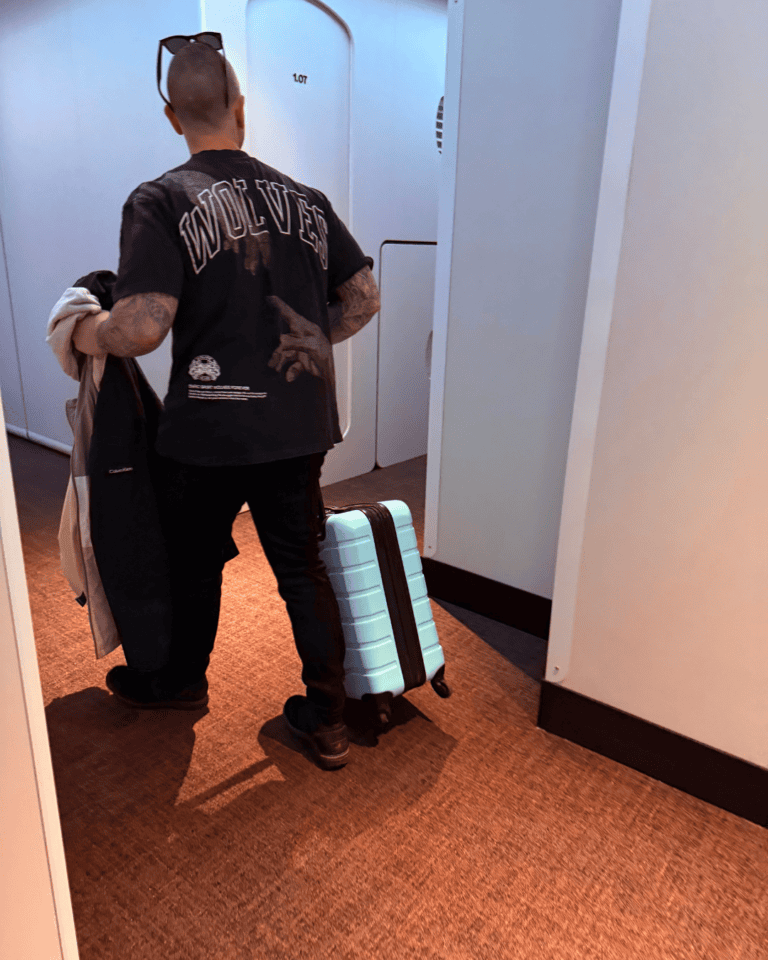
We will be honest, though. This one is hard for us. Nick has full tattoo sleeves and a haircut that reads as military to a lot of people, and I am a short blonde woman, which means that in countries where dyed hair is not common we stand out the moment we step outside. No outfit fixes that. If you have ever read this advice and thought it was not written for you, you are not wrong.
So we stopped trying to look like we live there and started focusing on looking like we know where we are going, which matters far more anyway. We check the map before we leave the restaurant instead of standing on a corner scrolling. When we do need directions, we step into a shop or a cafe rather than stopping in the middle of a busy sidewalk. We walk at a normal pace with our heads up, and if we take a wrong turn we keep moving and correct at the next block instead of stopping to visibly figure it out.
Our most specific habit is what we do when we realize we have gone the wrong way, which happens constantly. We do not stop, turn around, and walk back the way we just came. Instead we keep going and loop the block, or pick up a parallel street heading the right direction, and rejoin our route further along. Doubling back is the single most obvious signal that you are lost, and it also walks you straight past anyone who already noticed you the first time. Circling around costs you two extra minutes and you never look like you made a mistake.
Here is the thing worth understanding. People who target tourists are not looking for someone who looks foreign, because in most tourist areas that is nearly everyone. They are looking for someone who looks distracted, lost, or unsure. You may not be able to change how you look, but you can absolutely change how you carry yourself, and that is the part that actually moves you off the list.
Use transportation you can verify
Use licensed taxis or a rideshare app where one operates, and check the plate and driver before you get in. Skip the drivers who approach you inside an airport terminal, since the official queue is always outside and always cheaper. If you are taking a night bus or train, keep your bag between your feet or looped through a strap rather than in the overhead rack.
Be sensible about drinks
Watch your drink being poured, keep it with you, and be honest with each other about when the night has peaked. Jet lag makes two drinks feel like four, and the walk home in an unfamiliar city is the part of the evening that actually requires a clear head.
Health and Medication
Pack any prescription medication you need, keep it in the original labeled bottle, and split it between two bags so a lost suitcase does not become a real problem. We also travel with a small first aid kit that covers the everyday stuff, including bandages, pain relief, something for an upset stomach, tissues, and hand sanitizer, because finding a pharmacy at ten at night in a language you do not speak is its own adventure.
Pay attention to the food and water supply. If you are unsure where the tap water comes from, drink bottled or purified water, and remember that the same applies to ice and to anything rinsed in tap water. Keep a copy of your travel insurance on hand so you are not digging for it in an emergency.
What We Do Differently as a Couple
Traveling with a partner is a genuine safety advantage, but only if you use it. These are the habits we have built over the years, and they take almost no effort once they become routine.
- Split our cards, cash, and document copies between two bags, so one stolen bag never takes everything.
- Agree on a meeting point whenever we go anywhere crowded, whether that is a market, a festival, or a train station, because phones die and signal disappears.
- Each know where the other’s passport and insurance information live, since the person who can walk into an embassy might be the one whose bag did not get stolen.
- Have a low-key phrase that means we are leaving now, which lets either of us end a conversation or exit a situation without a discussion in front of anyone.
- Check in with each other before splitting up, even for an hour, and we say roughly when we will be back.
What to Do If Something Goes Wrong
Even with everything above, things occasionally go wrong. Knowing the first three steps ahead of time is what keeps a bad afternoon from turning into a ruined trip.
If your passport is lost or stolen
Report it to the local police and get a copy of the report, since you will likely need it for both the embassy and your insurance. Then contact the nearest embassy or consulate of your home country, which can issue an emergency replacement, often quickly enough to keep your trip on track. This is where those document copies earn their keep, because arriving with a copy of your passport makes the process dramatically faster.
If your cards are stolen
Freeze the cards in your banking app immediately, which is faster than calling from abroad, then report them properly. This is exactly why you carry more than one card and why you keep them in separate places, because losing one wallet should be an inconvenience rather than the end of your trip.
If your phone disappears
Use your partner’s phone or a laptop to locate it, lock it remotely, and erase it if it is clearly gone. Traveling together helps here, since between two people there is almost always one working phone. This is also the argument for having your documents in an email you can open from any computer rather than only in an app on the missing device.
Travel Safety FAQs
Prepared, Not Paranoid
Traveling safely is a mix of preparation and common sense, and almost all of it happens in the quiet moments before you leave. Copy your documents, split your cards, sort out your phone, and know what you would do on the worst possible day. Then go enjoy the new cultures, the unfamiliar food, and the people you are about to meet, with the confidence that comes from having already thought it through.
Ready to put this into practice? Start with our guide to planning a trip from scratch, or read up on surviving a long flight before your next international trip.
Travel smarter on every trip
The Passport Crew gets our honest guides, PTO-stacking strategies, and the couple travel tips that actually work.
Join the Passport Crew →Have a safety habit we missed? Drop it in the comments, because the best ones always come from other travelers.